Introduction to Digital Twin Technology
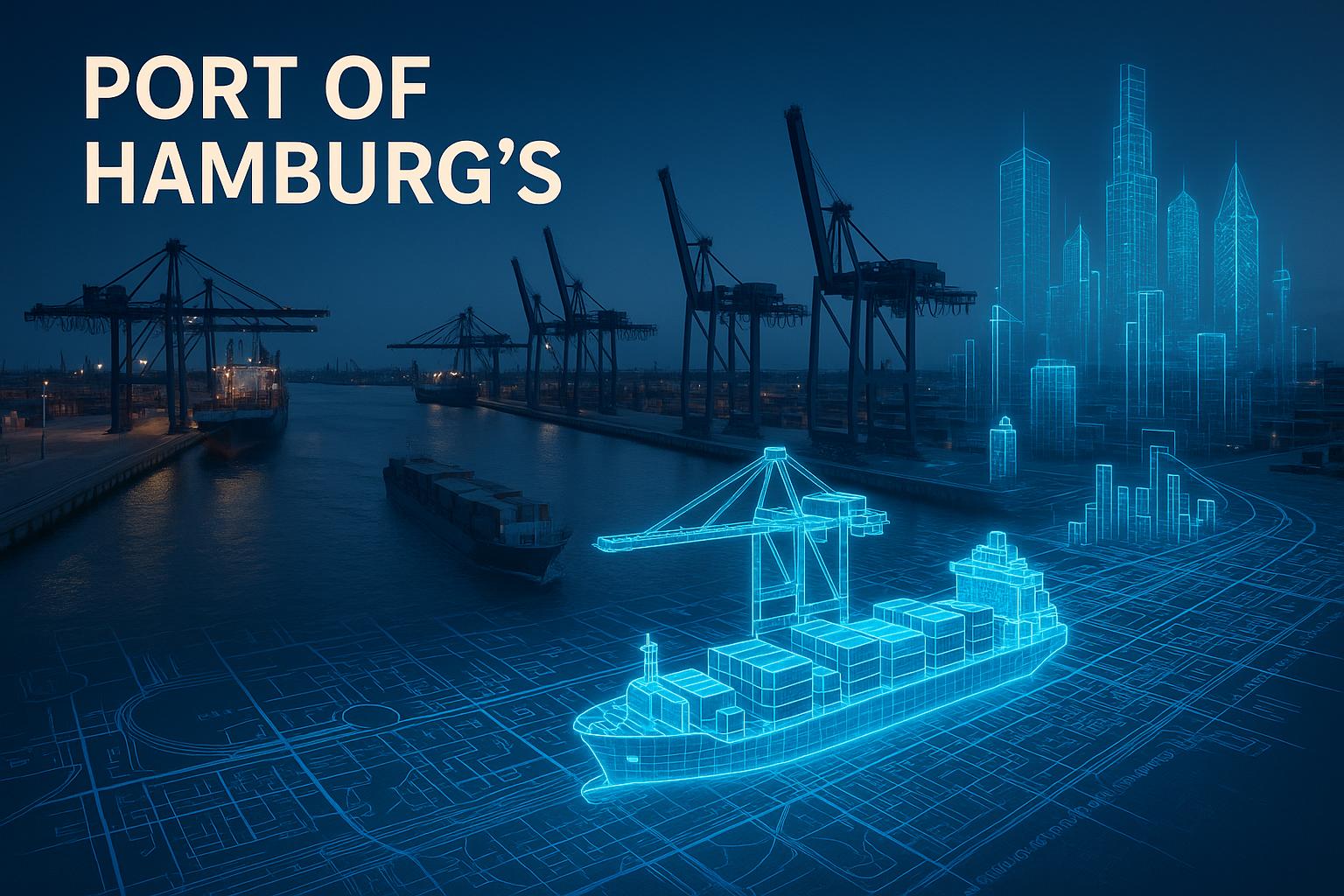
In recent years, the term digital twin has become increasingly prominent across a wide range of industries. This innovative concept involves creating a virtual model of a physical object, system, or process. Essentially, the virtual representation enables detailed data analysis and continuous monitoring, leading to improved efficiency, reduced operational costs, and enhanced capacity for innovation. One of the most significant implementations of digital twin technology is evident at the Port of Hamburg, Germany’s largest seaport. This application highlights the transformative potential of digital twins within complex industrial environments.
The Role of Port of Hamburg
The Port of Hamburg is a pivotal component of Germany’s economy, serving as a principal hub for both import and export activities. Handling millions of containers each year, the port encounters numerous challenges related to logistics, traffic management, and capacity utilization. Implementing digital twin technology represents a strategic initiative to address these challenges. This technology aids in optimizing operations, reducing downtime, and enhancing decision-making processes, thereby fortifying the port’s operational capabilities.
Functions and Features of the Digital Twin
The digital twin of the Port of Hamburg integrates several essential functions and features that encapsulate its expansive utility. This comprehensive virtual platform synthesizes real-time data acquired from sensors and IoT devices disseminated throughout the port’s extensive infrastructure. The harvested data is instrumental in simulating various scenarios and predicting potential outcomes. These capabilities significantly bolster strategic planning and operational optimization.
Traffic Management: One of the primary functions of the port’s digital twin is streamlining traffic management. By simulating vessel movements, port authorities are capable of anticipating traffic congestion points and adjusting plans proactively to mitigate delays.
Resource Optimization: The digital twin’s capacity for precise modeling and forecasting facilitates optimal resource allocation. Consequently, equipment and manpower are utilized in the most efficient manner possible, which in turn reduces operational costs and enhances productivity.
Sustainability Initiatives: In the realm of sustainability, environmental considerations are seamlessly integrated into the port’s operations. The digital twin’s simulations enable the port to evaluate the environmental impacts of proposed actions, thus promoting eco-friendly and sustainable practices.
Technological Infrastructure
The deployment of the digital twin at the Port of Hamburg leverages state-of-the-art technology. Key components encompass advanced sensors, IoT networks, and robust data analytics platforms. These technologies collaborate efficaciously to gather, process, and visualize data, ensuring the digital twin remains current and valuable for decision-making processes.
Data Integration: Seamless integration of data from diverse sources is of paramount importance for comprehensive analysis. This integration enhances the port’s forecasting and planning capabilities, leading to more informed and effective decision-making processes.
Machine Learning Algorithms: The employment of sophisticated machine learning algorithms allows the digital twin to identify data patterns and predict potential issues. It provides opportunities for proactive management, enabling the port to address potential challenges before they escalate into significant problems.
Conclusion
The introduction of digital twin technology at the Port of Hamburg signifies a remarkable advancement in modern port management. This technological innovation not only bolsters operational efficiency and sustainability but also positions the port as a frontrunner in the digital transformation landscape. As global trade volumes continue to soar, the implementation of digital twins in ports akin to Hamburg can function as a pertinent model for other ports worldwide. These digital advancements enable ports to modernize and augment their logistical capabilities, ensuring they remain competitive in a rapidly evolving global trade environment.
Moving forward, industries across various sectors are poised to explore and adopt digital twin technology to transform their operations fundamentally. The potential use cases are myriad, spanning industrial manufacturing, smart cities development, healthcare, and infrastructure management, among others. The underlying principle draws upon the robust capabilities of digital twins to offer dynamic, data-driven insights for ongoing projects or operational systems.
Moreover, incorporating digital twins into the industrial framework brings about a paradigm shift in maintenance practices. Predictive maintenance, a key advantage of digital twin technology, posits a move from traditional scheduled maintenance approaches to a more proactive and condition-based strategy. Consequently, industries can significantly reduce downtime and maintenance costs, thus enhancing overall efficiency and productivity.
Another promising domain where digital twins are poised to make a substantial impact is urban planning and the development of smart cities. By creating comprehensive digital replicas of city infrastructures, urban planners and local governments can simulate various scenarios, assess the implications of new developments, and optimize city operations. This holistic approach fosters sustainable growth by integrating transportation networks, energy resources, waste management, and public services within an interconnected digital ecosystem.
In healthcare, digital twin technology heralds a new era of personalized medicine and treatment plans. Beyond large-scale applications, digital twins offer the unprecedented capability of creating individualized models of patients. These models may simulate and predict how different treatments might affect a given patient, thus significantly improving precision medicine and patient outcomes.
In conclusion, as digital twin technology continues to evolve, its adoption is likely to accelerate across a diverse range of industries. The transformative power of this technology underscores its potential to redefine conventional processes, ushering in a new era of increased efficiency, innovation, and sustainability. The Port of Hamburg’s successful integration of a digital twin serves as a compelling case study illustrating the tangible benefits and far-reaching implications of this pioneering technology. As enterprises and governments continue to navigate the complexities of modern operational landscapes, digital twins provide a valuable tool for driving innovation and achieving strategic objectives.