Overview of Automation in the Port of Qingdao
The Port of Qingdao, one of the significant maritime hubs located in eastern China, has emerged as a pioneer in the global shift towards the automation of port operations. By integrating advanced technologies into its logistics processes, the port has significantly enhanced its efficiency, safety, and capacity, thereby establishing a benchmark for modern logistics operations.
Technological Advancements
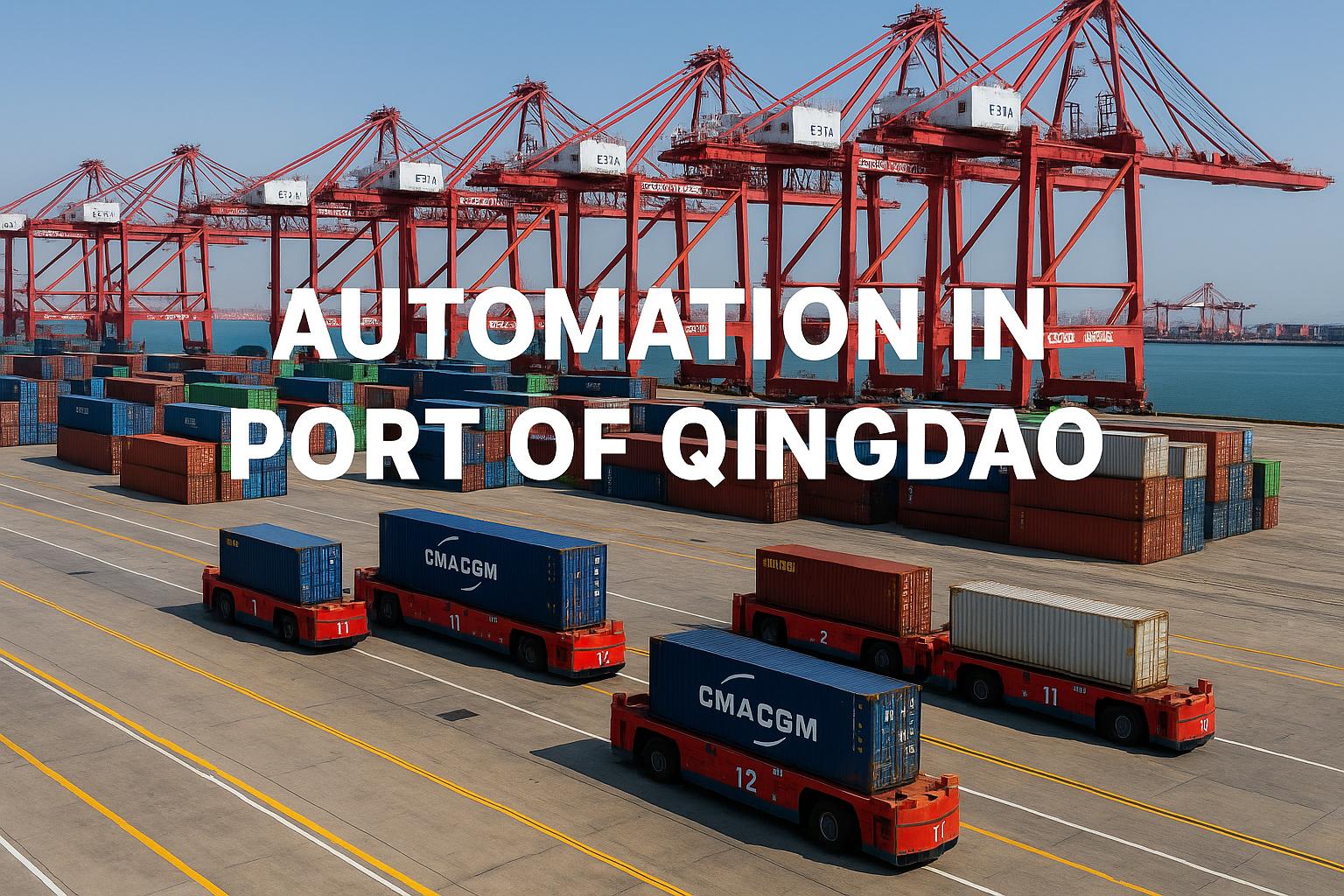
The move towards automation at the Port of Qingdao commenced with the integration of cutting-edge machinery and software, explicitly designed for efficient container handling. A key feature of the port’s technological advancement is the use of Automated Guided Vehicles (AGVs). These driverless vehicles are employed extensively to move containers between ships and storage areas, operating under the direction of a centralized control system, which ensures optimal route efficiency and reduces idle time at berths.
In addition to AGVs, Automated Stacking Cranes (ASCs) contribute significantly to port operations. These cranes, equipped with high-precision sensors, manage container handling with minimal human intervention. Integrated with the port’s terminal operating system, these cranes can adjust to real-time demands, ensuring continuous operation and thereby increasing overall efficiency.
Benefits of Automation
The integration of automation technologies in Qingdao provides numerous benefits, chief among them being enhanced efficiency and capacity. The reduced dependence on manual labor translates into quicker turnaround times for ships and a more seamless flow of goods. Moreover, automation significantly boosts safety by minimizing the risk of human error, thus reducing the likelihood of workplace accidents.
Another notable advantage is the port’s improved environmental performance. Automated equipment is specifically designed to optimize energy usage, and the reduction in idle times leads directly to lower emissions of greenhouse gases. This not only contributes to the port’s operational efficiency but also aligns with global objectives for environmental sustainability.
Challenges and Considerations
Despite the clear benefits, transitioning to automation is not without its challenges. Implementing such advanced systems necessitates a substantial initial investment, both monetarily and in the form of time invested in training personnel. Furthermore, careful planning and execution are required to integrate these new systems successfully with the existing infrastructure.
Another significant consideration is the impact of automation on workforce dynamics. The shift towards automated operations necessitates a change in the workforce’s skill set, moving from manual proficiency to technical expertise. This requires employees to adapt to new roles, emphasizing a deeper understanding of technology and system operations.
Future Prospects
Looking ahead, the Port of Qingdao is poised to maintain its leadership position in automated port operations. Continued investments in research and development, alongside a strong emphasis on sustainability, are anticipated to drive further enhancements in the port’s capabilities. The evolving fields of artificial intelligence and machine learning are expected to unlock new opportunities for optimization, providing Qingdao with a renewed competitive edge in global trade logistics.
The future holds promise for further technological advancements in port operations, which could include more sophisticated systems that leverage AI for predictive maintenance and operations, autonomous navigation for ships, and real-time data analytics for improved decision-making. Such innovations could potentially redefine logistics and supply chain efficiency, further solidifying Qingdao’s status in international trade.
In conclusion, the automation of the Port of Qingdao exemplifies the transformative power of technology in maritime operations. Through its continued advancements, the port not only enhances its operational capabilities but also sets a high standard for efficient and sustainable logistics practices worldwide. As technological innovations continue to evolve, the Port of Qingdao remains at the forefront of adopting and integrating these advancements, ensuring that it remains a pivotal player in the global maritime industry.