Drones: A New Frontier in Port Security
In recent years, drone technology has experienced remarkable advancements, becoming indispensable in various sectors, including port operations. The integration of drones in port security presents a significant leap forward, offering numerous operational advantages. As ports are busy hubs that handle vast amounts of goods and numerous daily transactions, managing security within these areas is crucial for ensuring the flow of trade and safety. Utilizing drones for surveillance and operational processes presents many promising perspectives for the future.
Enhanced Surveillance Capabilities
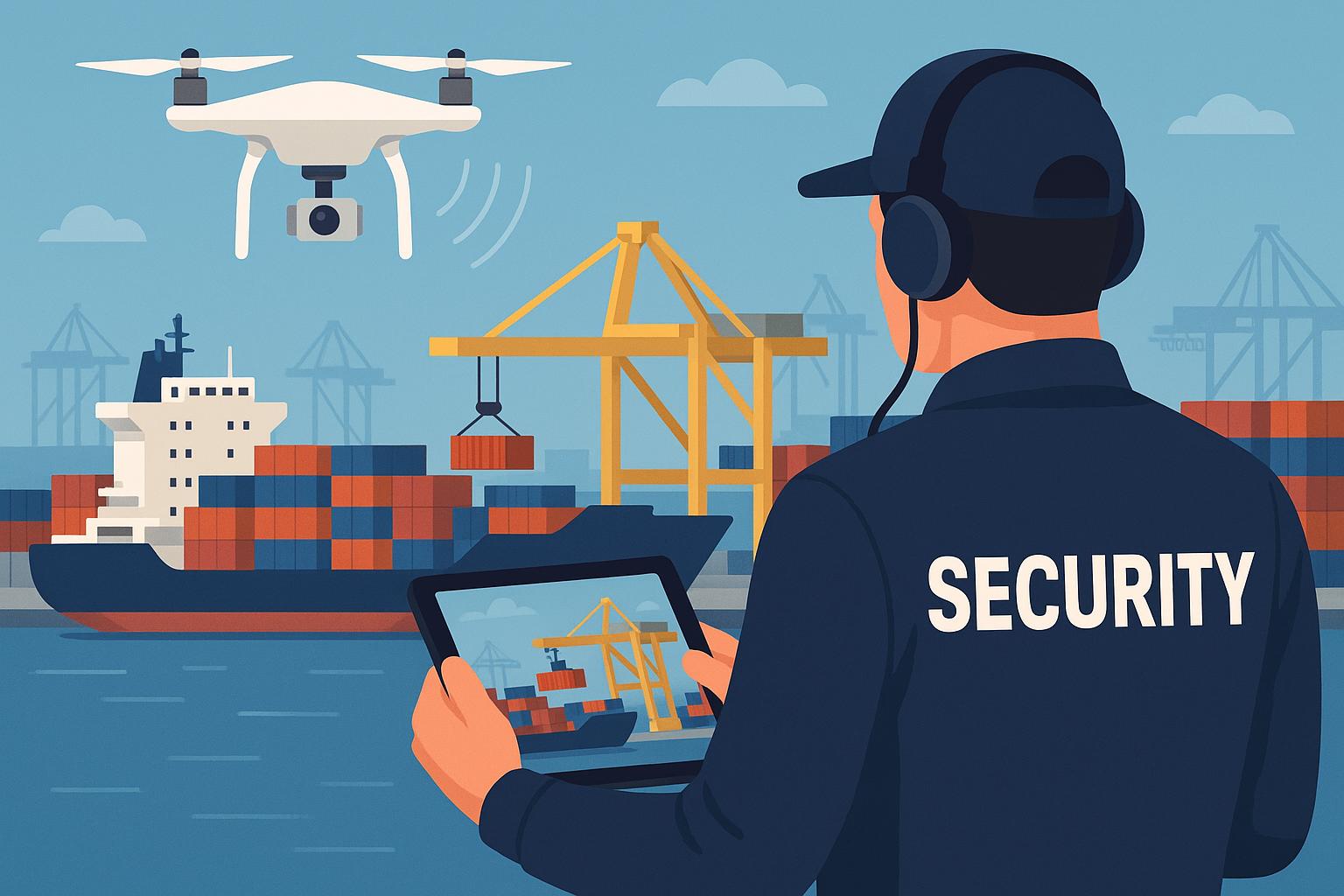
Drones equipped with high-resolution cameras and thermal imaging sensors provide unparalleled surveillance capabilities. These devices can cover vast areas of a port quickly and efficiently, capturing detailed images and real-time video feeds. This remote monitoring capability allows for continuous oversight of port activities, reducing the risk of unauthorized access and illegal activities.
Moreover, drones are capable of accessing areas that might be physically challenging or unsafe for personnel to reach. They can hover above shipyards, cargo holds, and other structures where traditional surveillance systems or physical inspections might falter. The ability to conduct aerial surveillance allows port authorities to maintain a visual on operations that can be as detailed or as broad as needed.
Another critical advantage is the ability to utilize drones for night-time surveillance. With thermal imaging sensors, drones can detect variations in heat emitted by objects and people, revealing activities that ordinary cameras might miss in the dark. This function is especially useful in ensuring comprehensive port safety even outside regular working hours.
Rapid Response to Incidents
In the event of a security breach or emergency, drones can be deployed rapidly, reaching the affected area much faster than traditional response teams. This swift deployment can provide security personnel with crucial information, allowing them to assess situations accurately and respond appropriately. Consequently, drones contribute to enhancing the overall response time and effectiveness during security incidents.
Their agility enables them to navigate to incident locations promptly, providing real-time data and visualization to the control centers. Through live feeds, crews can decide on the best course of action, whether it’s directing emergency response teams to specific locations or re-routing logistics to mitigate risks.
Furthermore, drones can be equipped with a variety of sensors that detect chemical, biological, radiological, or environmental anomalies, delivering crucial information before response teams set foot on-site. Gathering such real-time, accurate data presents huge advantages in guiding emergency response strategies efficiently.
Cost-Effectiveness and Resource Efficiency
Deploying drones for surveillance and monitoring can be more cost-effective than traditional methods, which often require extensive manpower and infrastructure. Drones reduce the need for physical patrols, thus conserving resources and lowering operational costs. Additionally, the data collected by drones can be stored and analyzed, facilitating more informed decision-making processes.
By reducing dependence on human-operated surveillance and expensive infrastructure, drones can minimize long-term financial burdens. They offer a flexible and scalable solution, allowing port authorities to adjust their surveillance based on real-time demands and needs, without the hefty costs associated with fixed surveillance installations.
The sustainability of employing drones is further highlighted by their efficiency in data management. The analytical capability they bring allows for the compilation of data that can be invaluable when planning strategic security measures. Insights derived from drone-gathered data aid in identifying patterns, potential security risks, and needed operational adjustments, all without the personnel costs associated with manual monitoring.
Challenges and Considerations
Despite their advantages, the use of drones in port security operations presents several challenges. Privacy concerns are paramount, as drones capture extensive footage, which could inadvertently infringe on personal privacy. Capturing images and footage across vast port areas necessitates careful judgement in balancing surveillance needs with individual rights, necessitating a robust privacy policy framework within security operations.
Furthermore, technical issues such as battery life, limited flight time, and weather conditions can affect drone performance. Most current drones have a limited flight time, commonly between 25 and 30 minutes, impacting their ability to conduct lengthy operations. Weather conditions such as high winds, rain, and storms can further impair their effectiveness, reducing the reliability of drone operations in different environments.
Regulatory constraints also play a significant role, as port authorities must navigate complex legal frameworks governing drone usage. International, national, and local regulations might impose restrictions on clearance zones, flying heights, and timings which hamper the unrestricted use of drones in port environments.
In conclusion, while drones offer transformative capabilities for enhancing security in port operations, their deployment must be balanced against privacy, technical, and regulatory challenges. It is vital for policymakers and port authorities to actively monitor and adapt to these challenges, ensuring drones are integrated seamlessly.
As technology continues to evolve, so too will the strategies and policies that govern the integration of drones into port security frameworks. Innovations in drone technology may address many current limitations such as improving flight duration and resistance to adverse weather conditions. As these technologies advance, port authorities must remain proactive in understanding and implementing the best practices for maintaining a safe, secure environment. Addressing privacy concerns and conforming with regulations will ensure the balanced use of this groundbreaking tool, supporting the ongoing evolution of world trade, logistics, and maritime safety.