Overview of Green Port Initiatives in the Port of Gothenburg
The Port of Gothenburg, the largest port in Scandinavia, has committed itself to ambitious green port initiatives. These initiatives aim to significantly curb the environmental impact generated by port operations. In doing so, the port seeks to achieve sustainable growth and foster development without compromising environmental well-being. This approach not only offers ecological benefits but also bolsters the port’s reputation and competitiveness on an international scale.
Environmental Goals and Strategies
The environmental goals set by the Port of Gothenburg are comprehensive and forward-thinking, directing focus towards minimizing emissions, enhancing energy efficiency, and accelerating the transition to renewable energy sources. These goals are enacted through a series of well-defined strategies that align with both national directives and international standards for environmental protection and compliance. Successfully achieving these goals involves robust planning and execution with measurable targets.
Emission Reduction
A cornerstone of the Port of Gothenburg’s environmental strategy is its focus on emission reduction. Recognizing that emissions from ships and port operations can have detrimental effects on air quality, the port has put in place stringent policies to encourage the use of cleaner fuels. This initiative extends to promoting the adoption of advanced emission-reducing technologies. Additionally, the port incentivizes ships to utilize onshore power supply systems rather than running auxiliary engines when docked. By connecting to the power grid, vessels can significantly reduce nitrogen oxides, sulfur oxides, and carbon dioxide emissions while in port.
Energy Efficiency
Energy efficiency is pivotal in the wide array of green initiatives sponsored by the Port of Gothenburg. To accommodate this, the port has allocated investment towards modernizing its infrastructure, which includes upgrading equipment and facilities. These upgrades aim to minimize energy consumption while improving overall operational performance. Enhanced energy efficiency not only fosters reduced emissions but also results in cost savings, thereby contributing to the port’s economic sustainability.
Renewable Energy Utilization
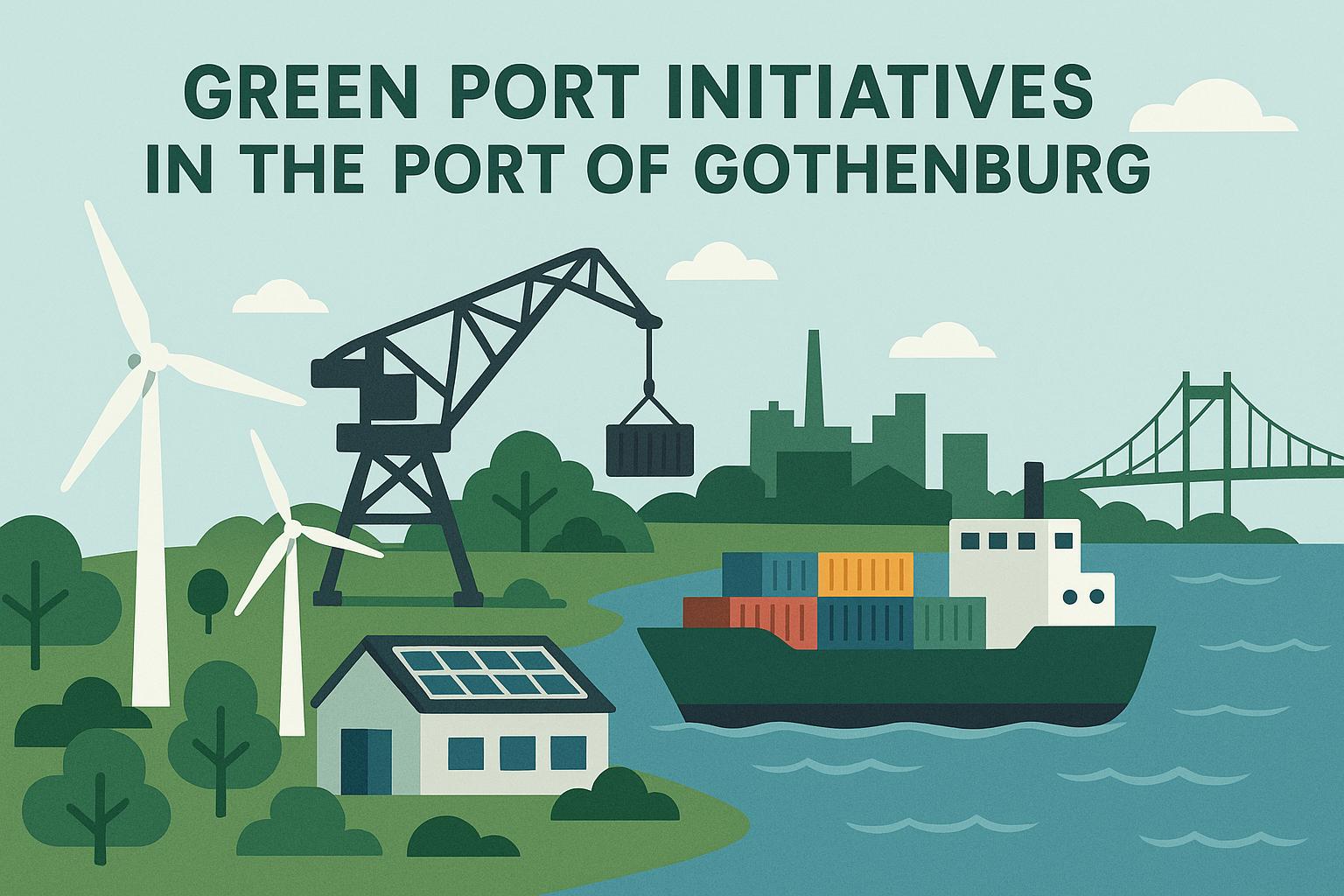
Exploration and utilization of renewable energy stand at the forefront of the port’s green initiatives. By integrating solar panels and wind turbines as part of the infrastructure, the port harnesses clean energy for its operations. Furthering this commitment, the port supports ongoing research and development endeavors aimed at discovering new technologies that can efficiently harness renewable energy at sea and on land. This thorough integration of renewable resources aligns with global climate goals, striving to reduce dependence on fossil fuels.
Collaboration and Innovation
The Port of Gothenburg firmly believes that collaboration and innovation are essential to achieving its environmental objectives. Through strategic alliances and partnerships, the port collaborates with industry giants, governmental bodies, and research institutions. This cooperative approach facilitates knowledge-sharing and spawns innovative solutions, paving the path for sustainable port operations now and into the future.
Research Partnerships
The port’s proactive stance, involving partnerships with academic and research institutions, leads to the launch of innovative projects. These projects mainly focus on piloting emergent environmental technologies. Through these collaborations, techniques and processes can be refined and implemented more broadly across the global maritime industry, thereby contributing to a cleaner and more sustainable maritime ecosystem.
Industry Cooperation
In parallel with research efforts, the port actively fosters cooperation among industry stakeholders. By motivating shipping companies and logistics providers to employ greener practices, the port facilitates a collective effort to alleviate environmental impacts. The port regularly organizes workshops, seminars, and pilot projects, serving as platforms for exchanging best practices and pioneering new ideas. This mutually beneficial relationship aids in the successful adoption and dissemination of green practices industry-wide.
Impact and Future Prospects
The positive impacts from the green initiatives undertaken by the Port of Gothenburg are tangible, yielding substantial reductions in the environmental footprint of port activities. These efforts quantitatively and qualitatively contribute to a cleaner surrounding environment and create a benchmark for other ports globally to undertake similar measures. This progress illustrates the potential for ports worldwide to significantly contribute to the global mission of reducing carbon emissions.
Looking ahead, the Port of Gothenburg continues to explore and identify new opportunities aimed at enhancing sustainability. Technological advancements in green energy, when integrated with well-constructed policy frameworks, promise further improvements to the environmental performance of the port. These enhancements are beneficial not only at the local level but also contribute to broader global objectives of combating climate change.
Conclusion
The green port initiatives at the Port of Gothenburg offer a compelling model for sustainable practices in the maritime sector. By weaving together elements such as emission reduction, energy efficiency, and renewable energy utilization, the port showcases how disciplined and effective environmental strategies can drive sustainable development. These initiatives ensure maintenance of operational efficiency without neglecting ecological integrity. As they progress, the initiatives are destined to play a crucial role in shaping how sustainable port management is approached at a global scale, setting a new standard for environmentally conscious business operations within the maritime industry.