Overview of the Port of Richards Bay
The Port of Richards Bay, situated on the eastern coastline of South Africa, stands as a leading facility in the management of bulk cargo. Established in 1976, this port has experienced significant growth, becoming one of the largest ports in South Africa by cargo tonnage. Located strategically in the KwaZulu-Natal province, it plays a pivotal role in the international trade of bulk commodities, supporting the import and export operations that are crucial for various industries in the country and beyond.
Infrastructure and Capacity
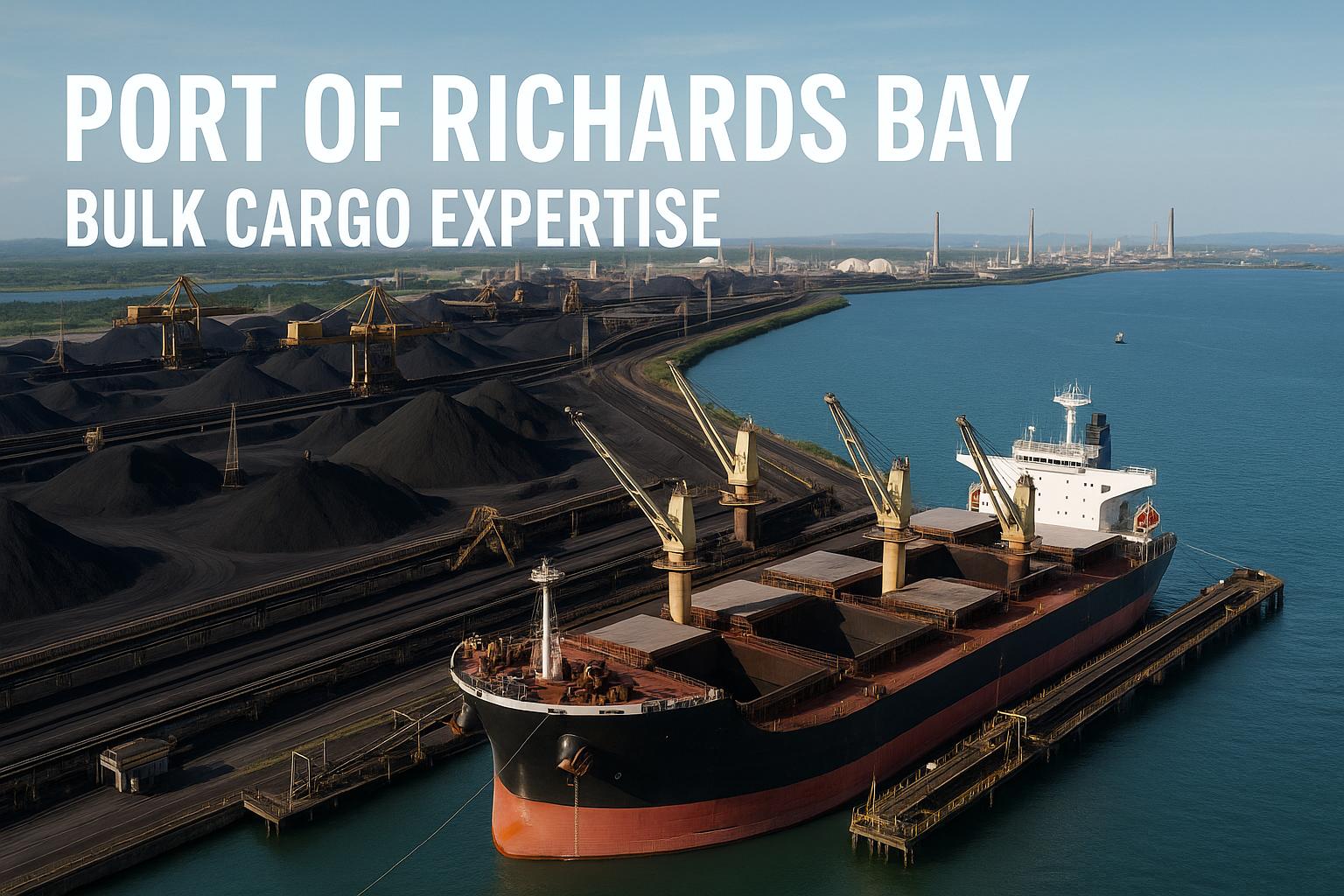
Infrastructure: The impressive and robust infrastructure of Richards Bay enables efficient handling of diverse bulk cargo types. The port features multiple berths, each specifically designated for distinct types of bulk goods such as coal, iron ore, and other minerals. These berths are outfitted with modern handling equipment, ensuring efficient loading and unloading processes. State-of-the-art machinery facilitates the swift transfer of goods, minimizing delays and optimizing turnaround times of vessels that dock at the port.
Capacity: The Port of Richards Bay boasts a remarkable throughput capacity, handling over 80 million tons of bulk cargo on an annual basis. This impressive figure is made possible by the port’s combination of deep-water berths, adept at accommodating various sizes of vessels, along with specialized machinery like conveyor systems and massive ship loaders. These features enable the port to conduct swift and efficient cargo handling operations, further enhancing its attractiveness to global trading partners seeking reliable and efficient port services.
Key Bulk Commodities Handled
Richards Bay has earned a stellar reputation for its specialization in a variety of key bulk commodities, further cementing its crucial role in international trade.
Coal: As a major global coal port, Richards Bay processes a substantial portion of South Africa’s coal exports. The coal terminal is equipped with cutting-edge facilities that enhance operational efficiency and minimize handling time. These facilities ensure the coal is adequately stored, managed, and transported, meeting the high standards expected by international buyers.
Iron Ore: In addition to coal, the port handles significant volumes of iron ore, serving as a critical conduit for the export of this resource to international markets. Specialized equipment and processes are in place to ensure the integrity and quality of the ore are maintained throughout its handling and storage. This ensures that international market demands are met with reliable supply and quality, further bolstering South Africa’s reputation as a key supplier in the global iron ore market.
Other Minerals: Beyond coal and iron ore, Richards Bay manages an array of additional minerals and bulk commodities such as aluminium, chromite, and titanium. Its expertise in handling these materials is crucial for maintaining its status as a vital link in the global mineral supply chains. By adeptly managing these resources, the port supports diverse industries, serving the needs of an extensive range of industrial processes worldwide.
Technological Advancements and Efficiency
In its pursuit of enhanced bulk cargo services, the Port of Richards Bay has adopted a variety of technological innovations. Automated systems and digital solutions now play central roles in streamlining operations. These advancements have revolutionized the way cargo is tracked, managed, and shipped, offering enhanced efficiency across all port activities. Technologies such as RFID (Radio Frequency Identification) and GPS tracking systems have improved inventory management and scheduling, allowing for real-time data access and decision-making. This comprehensive approach to technological integration ensures that the port remains competitive and efficient in a rapidly evolving global market.
Economic Impact and Strategic Importance
The economic impact of the Port of Richards Bay is far-reaching, positioning it as a vital hub within South Africa’s export economy. The port significantly contributes to job creation, not only through direct employment within port operations but also indirectly through various industries it supports. Sectors such as mining, manufacturing, and logistics benefit from the port’s activities, leading to wider economic growth and development.
Strategically, the Port of Richards Bay is an integral component of South Africa’s maritime and trade infrastructure, playing an essential role in the global trade of raw materials. Its ongoing investment in infrastructure and technology cements its status as a leader in bulk cargo handling. This proactive approach to development ensures that Richards Bay remains a cornerstone of international trade, promoting economic prosperity and fostering stronger trade relationships between South Africa and its global partners.
In summary, the Port of Richards Bay is not just a critical node in the logistics chain of bulk commodities; it is a dynamic and influential entity fostering global economic connections. By maintaining its focus on operational excellence and infrastructure development, the port continues to enhance its contributions to global trade, offering substantial benefits to the regional and national economy, and promoting stronger ties with international markets.