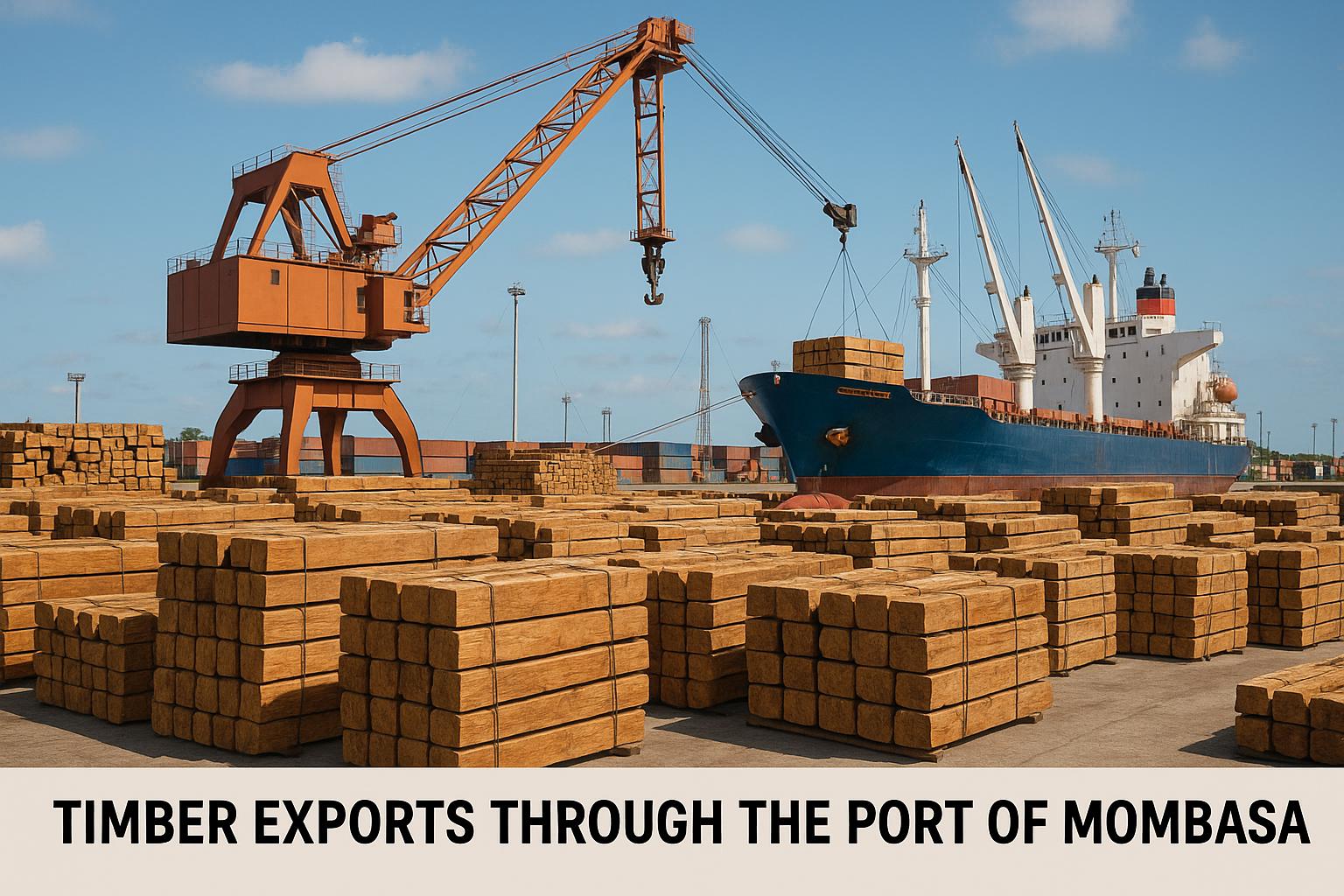
Overview of Timber Exports Through the Port of Mombasa
The Port of Mombasa is not merely a point on a map; it stands as a vital conduit for Kenya’s and East Africa’s timber exports, linking these regions to the vast, complex web of the global market. As a central node in maritime trade, Mombasa facilitates the movement of goods with precision and efficacy. Its geographical advantage and state-of-the-art facilities empower it to serve as a powerhouse in the timber industry, a sector deeply entwined with both regional prosperity and global commerce.
Importance of Timber in the Region
Timber holds an esteemed place in East Africa’s socio-economic tapestry. It is not just a commodity; it is an engine driving economic growth and workforce participation. The timber industry, largely driven by exports, is crucial in generating revenue and fostering local economic development. Indigenous types of timber, like mahogany and teak, are especially sought after in international markets due to their superior durability and aesthetic appeal. These hardwoods are a testament to the region’s rich biodiversity, finding their way into global supply chains where they are transformed into furniture, construction materials, and various other products.
Role of the Port of Mombasa
At the heart of timber exportation lies the Port of Mombasa, which functions as a linchpin for the seamless international transit of timber products. The port is endowed with extensive infrastructure, including specialized storage facilities designed to handle the unique characteristics of timber. Advanced container handling services ensure efficient logistics operations, minimizing turnaround time and maximizing throughput. The port’s integration with major global shipping lines connects East Africa to continents such as Asia, Europe, and the Middle East, ensuring that timber can reach distant markets with relative ease.
Challenges in Timber Exports
Navigating the timber export landscape involves overcoming numerous challenges. Foremost among these is the pressing need for sustainable forestry practices. The specter of deforestation and ecological degradation looms large, demanding urgent attention and action. Unsustainable exploitation poses the risk of exhausting vital timber resources, jeopardizing the environment and, by extension, the communities reliant on this sector. Exporters also face the complicated matrix of international regulatory compliance. Countries importing timber are increasingly imposing stringent standards regarding legality and sustainability, challenging exporters to adapt and innovate continuously.
Efforts Towards Sustainable Practices
In response to these challenges, concerted efforts are underway to pivot towards sustainable forestry practices. Certification schemes like those offered by the Forest Stewardship Council (FSC) are gaining traction by endorsing responsible forestry management practices. Such certifications serve as a mark of reliability and integrity in the global market, offering reassurance to conscious consumers and import regulators. Moreover, there is a burgeoning emphasis on value addition whereby raw timber is processed into semi-finished or finished products domestically before export. This approach not only adds economic value but also creates additional employment opportunities, fortifying local economies while enhancing competitiveness in global markets.
Conclusion
In conclusion, the Port of Mombasa continues to be an indispensable player in the timber export sector of Kenya and its neighboring regions. By embracing sustainable and legal practices, the industry can maintain and potentially enhance its contribution to the regional economy’s vibrancy, all while safeguarding precious forest ecosystems for future generations. Investment in regulatory frameworks and infrastructure development will fortify Mombasa’s standing as a leading exporter of timber on the world stage, balancing economic imperatives with ecological stewardship. As stakeholders continue to innovate and adapt, the port’s role is poised to grow, navigating the complexities of global commerce while supporting regional development.