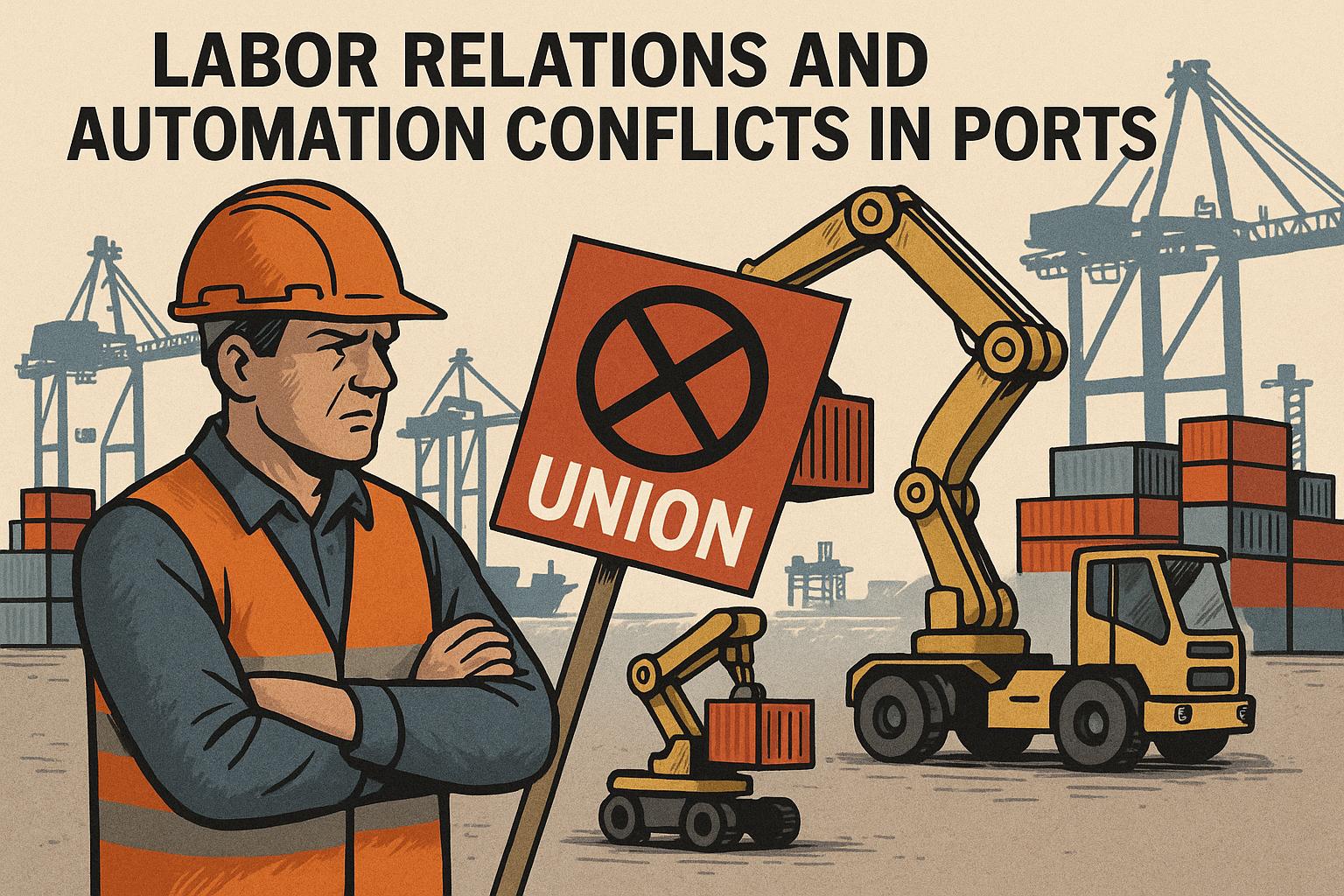
Introduction to Labor Relations in Ports
Port operations are critical to global commerce, facilitating the movement of goods worldwide. However, with the advent of new technologies, labor relations in these settings are undergoing significant changes. The integration of automation is reshaping the roles traditionally held by human workers, leading to complex negotiations between port authorities and labor unions.
The Role of Automation in Ports
The introduction of automation within port environments is primarily aimed at boosting efficiency and enhancing competitiveness. Advanced automated systems have the capability to perform tasks encompassing container loading, unloading, and intra-port transportation with unparalleled speed and accuracy. From a cost perspective, these technologies can markedly lower operational expenses by streamlining workflows and reducing the reliance on large human workforces. Furthermore, automation can foster a safer working environment by minimizing the necessity for employees to perform perilous manual tasks, thereby significantly reducing the risk of workplace accidents and injuries.
Implications for the Workforce
The ongoing integration of automation technologies in port settings is fundamentally altering workforce dynamics. As the reliance on traditional labor diminishes, the immediate consequence is often job displacement. This trend necessitates a paradigm shift for workers, urging them to transition to new and evolving roles within the port infrastructure or to seek opportunities in different employment sectors. For those choosing to remain in the port industry, there is a pressing need to acquire a new skill set centered around operating and maintaining sophisticated machinery and software. This emphasizes the importance of ongoing training and education programs to equip the workforce with the necessary competencies to thrive in an increasingly automated work environment.
Labor Unions and Negotiations
Labor unions are pivotal in advocating for the rights and welfare of port workers, especially in the face of sweeping automation changes. Unions often embark on negotiations with port management to strike a balance between technological advancements and worker welfare. These negotiations are multifaceted, typically covering aspects such as job retraining programs geared towards upskilling the workforce, the adjustment of work hours to streamline with technological workflows, and the establishment of severance packages for workers who have been displaced by automation. By pressing for these provisions, labor unions work to ensure that automation’s impact does not disproportionately disadvantage the workforce.
Case Studies of Port Automation Conflicts
The shift towards automation in ports has not been without its share of conflicts and challenges, with several high-profile cases that highlight these issues. In some scenarios, automation has instigated prolonged labor strikes as workers push back against changes perceived as threats to their jobs. These strikes often bring port operations to a halt, underscoring the critical nature of engaging all stakeholders—management, unions, and workers—in dialogue before implementing technological changes. In contrast, there are instances where constructive collaboration between unions and port operators has led to mutually beneficial agreements. These agreements often outline clear measures to protect workers’ rights while permitting the gradual integration of new technologies. Such collaborations serve as models demonstrating that balanced approaches can be achieved through proactive communication and negotiation.
Conclusion
The confluence of labor relations and automation at ports encapsulates a dual-edged sword of challenges and opportunities. While the operational advantages of automation are indisputable, there is a fundamental need for careful management to ensure fair and equitable treatment of the human workforce. It is incumbent upon port authorities and labor unions to engage in effective dialogue and negotiation, ensuring that technological progress does not come at the expense of employee livelihoods. By striving for a balance that supports innovation while safeguarding sustainable employment, port operations can continue to thrive as central hubs in global commerce.