Introduction
Ports worldwide are playing an increasingly crucial role in efforts to reduce carbon emissions. This shift reflects a broader global commitment to mitigating climate change impacts. By adopting decarbonization strategies, ports aim to enhance sustainability and meet international environmental targets.
The Importance of Decarbonizing Ports
Ports are critical nodes in global supply chains. However, they are also significant sources of greenhouse gas (GHG) emissions due to the equipment, vehicles, and vessels that are integral to their operations. Decarbonizing ports can substantially reduce overall emissions and thus contribute positively toward combating climate change. As hubs of international trade and transportation, their emissions extend beyond local environments, impacting global atmospheric conditions.
Reducing emissions at ports involves a comprehensive approach where every aspect of port operations needs attention and improvement. Ports account for a considerable amount of emissions, not only due to the movement of goods but also through the energy consumed in various operations. Reducing this footprint not only benefits the environment but also strengthens the efficiency and cost-effectiveness of port operations, providing a competitive edge in a market that increasingly values sustainability.
Global Commitments and Targets
One of the primary motivators for port decarbonization lies in the commitments established under international environmental agreements, such as the Paris Agreement. These frameworks aim to limit global warming to below 2 degrees Celsius above pre-industrial levels, with a focus on pursuing efforts to limit the temperature increase to 1.5 degrees Celsius. To align with these targets, ports are setting ambitious goals and timelines to cut their emissions.
Building on these frameworks, ports are enhancing cooperation, sharing expertise across sectors, and engaging in global dialogues to exchange knowledge and best practices. By setting specific and measurable targets, ports demonstrate their commitment to reducing their carbon footprint, which translates into clear action plans aimed at various operational facets.
Technological Innovations
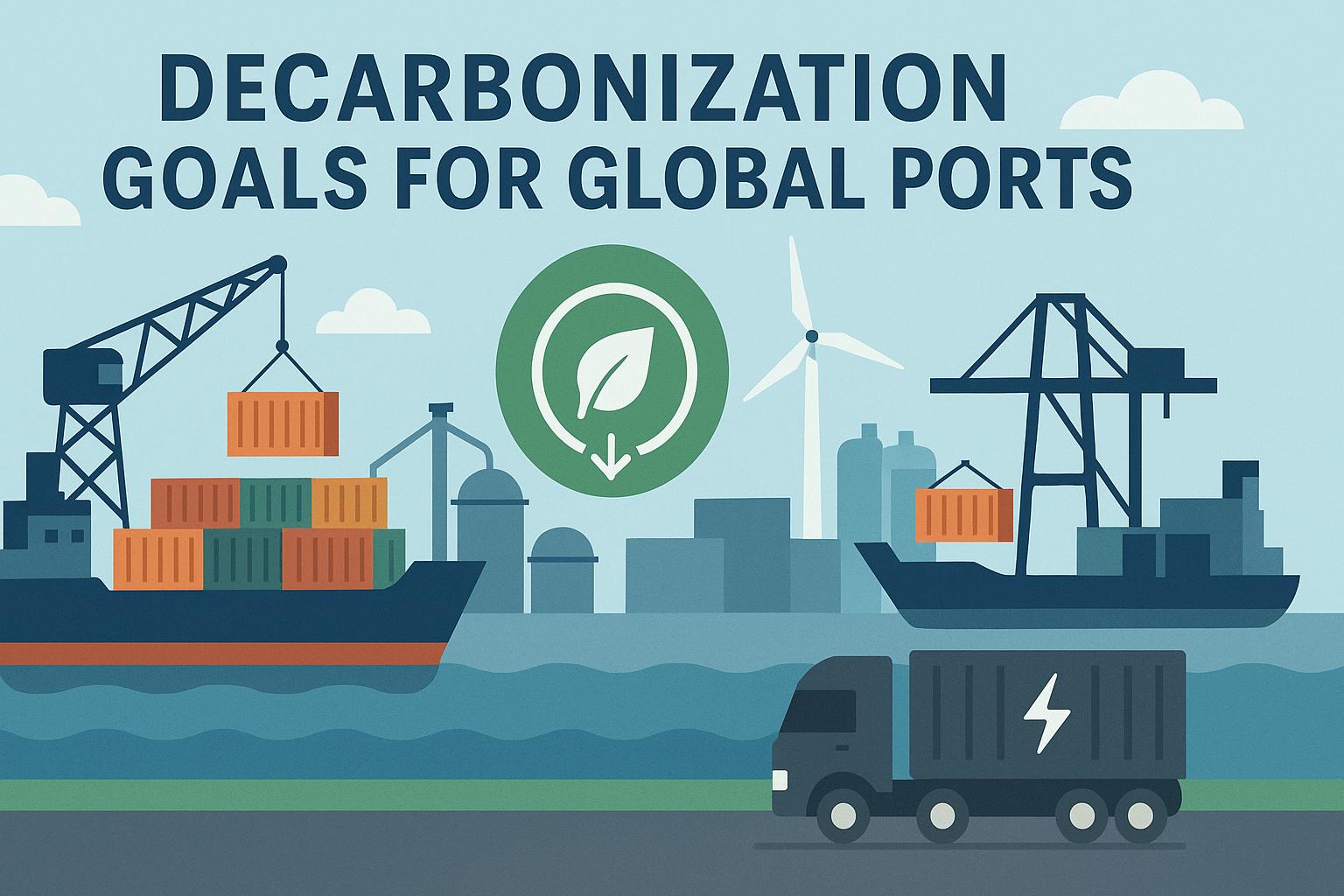
Technological innovation is a cornerstone of port decarbonization strategies. Ports are increasingly investing in and experimenting with renewable energy sources like wind and solar power. These energy sources are being harnessed to replace or supplement traditional fossil fuels used in port operations, such as powering cranes and lighting terminals.
The electrification of port operations is another significant trend. Many ports are transitioning to electric-powered terminal equipment and vehicles, reducing reliance on diesel and other fossil fuels. Electrifying operations not only lowers emissions but also eases compliance with tightening regulations on air quality.
Moreover, ports are deploying digital solutions to optimize logistics and operations. Through solutions such as real-time data analytics and automated resource management systems, ports can improve the efficiency of their operations, reducing idle time and unnecessary energy consumption.
Collaboration and Partnerships
The successful implementation of decarbonization strategies at ports requires widespread collaboration among diverse stakeholders, including port authorities, shipping companies, government agencies, and technology providers. This collaboration is essential not only for sharing innovative approaches but also for ensuring that these ideas are successfully implemented.
Collaborative efforts enable shared investment in necessary infrastructure upgrades and help navigate the regulatory landscape, ensuring that environmental objectives align with operational and economic needs. Partnerships allow stakeholders to pool resources, leverage expertise, and develop solutions that can be scaled and replicated across different ports worldwide.
Challenges in Achieving Decarbonization Goals
Despite the progress toward achieving decarbonization goals, ports face several significant challenges. Transitioning to low-carbon technologies requires substantial investments, often without immediate economic returns. The high costs associated with these new technologies can be a deterrent to widespread adoption, especially for smaller or financially constrained ports.
In addition, the availability of renewable energy sources can vary significantly by region, which can affect the feasibility of relying on these sources as a primary energy supply. Ports in regions without significant access to wind or solar resources may have to look for alternative solutions, which can further increase costs and complexity.
Regulatory barriers also loom large. Ports must navigate a complex web of local, national, and international regulations. Differences in policy framework adoption across regions can result in inconsistent progress, as certain ports may advance rapidly while others lag due to differing environmental priorities or lacking political support.
Conclusion
The decarbonization goals for global ports are both necessary and achievable. As pivotal players in the international effort to tackle climate change, ports are poised to make significant contributions to reducing emissions on a global scale. Through continued innovation, strategic investment, and enhanced cooperative efforts, ports can significantly minimize their environmental impact, paving the way for a more sustainable future.
By embedding sustainability into their core operations and embracing the challenges ahead, ports can lead the transformation towards a low-carbon economy. As momentum builds, the expansion of clean energy infrastructures and smart technologies will not only support environmental goals but also enhance economic resilience and operational durability.