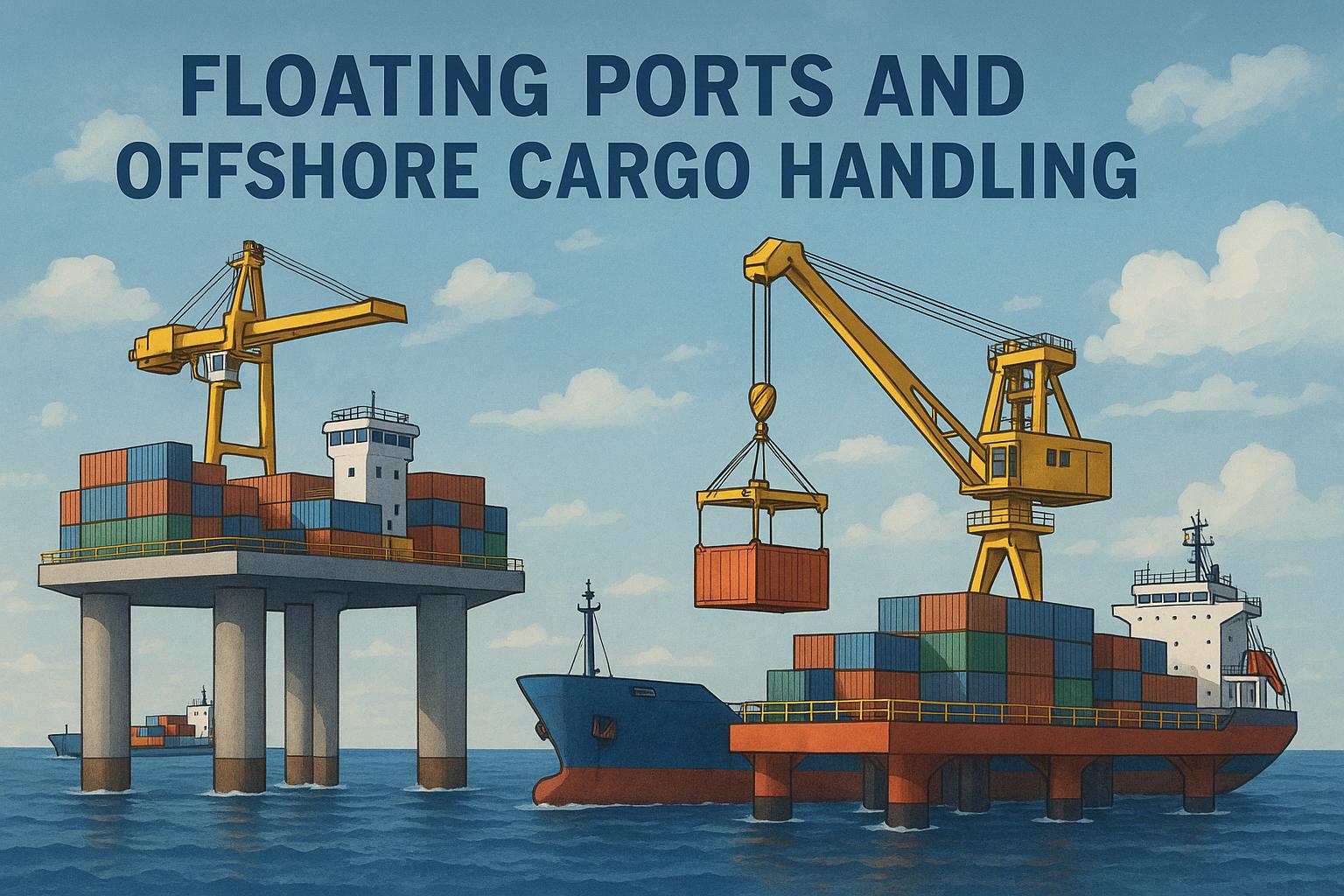
Introduction to Floating Ports and Offshore Cargo Handling
Floating ports and offshore cargo handling represent a transformative approach in the logistics and maritime supply chain sectors. As global trade continues to expand, addressing infrastructural limitations at traditional ports has become imperative. The evolution of floating ports presents an innovative solution to circumvent constraints posed by conventional port facilities.
Understanding Floating Ports
Floating ports are maritime structures designed to facilitate the loading and unloading of cargo without fixed land-based infrastructure. By positioning themselves in deeper waters offshore, they provide a high degree of flexibility in operations and connectivity. A floating port typically includes essential facilities such as cranes, storage areas, and loading docks. One of the primary features of floating ports is their dynamic nature, which allows them to be relocated based on changes in seasonal demands or shifts in emerging trade routes.
Essentially, floating ports reduce the reliance on traditional, land-based infrastructure that may not be feasible in every geographical context. They create opportunities for nations with significant coastal and island territory that face prohibitive challenges in constructing large, land-based ports due to limited space or environmental conservation policies. Deploying a floating port requires relatively minor alteration of existing coastal landscapes, which is an added advantage.
Advantages of Floating Ports
Floating ports offer several benefits over traditional port facilities. One significant advantage is their ability to overcome geographical limitations. Coastal and island nations might face challenges related to the construction of large, land-based ports due to environmental or space constraints. Avoiding the need for traditional extensive construction means that these nations can enhance their capacity to facilitate trade without the hurdles of land use and development conflicts. Additionally, floating ports can stimulate economic activity by opening up trade routes that were previously inaccessible.
Another key advantage of floating ports is their quick adaptability to changing trade patterns and market demands. By virtue of their mobility and adaptability, floating ports can be repositioned in times of natural calamities or geopolitical tensions, ensuring that supply chain operations remain uninterrupted. This responsiveness is particularly crucial during emergencies or events that disrupt normal trade flows. In addition, by being mobile, these ports can align themselves better with new opportunities in global shipping and re-distribute infrastructure in a way that reflects real-time economic demands.
Moreover, floating ports can reduce congestion at traditional ports. As existing port facilities struggle to keep up with the pace of growing international trade, floating ports can serve as supplementary facilities to alleviate the pressure, thereby enhancing overall logistic efficiency. They provide an agile response to bottlenecks in existing port infrastructure, often at a lower cost and with reduced lead times for deployment.
Offshore Cargo Handling
Offshore cargo handling is a critical component when employing floating ports. This involves the transfer of cargo between ships and the floating port using a combination of technological solutions to facilitate seamless operations. Effective offshore cargo handling ensures the smooth and efficient transference of goods, which mirrors the primary function of traditional port activity but within the context of a floating platform.
Technological Solutions
Advanced automation and digitalization have significantly enhanced the efficiency of offshore cargo handling. Specialized equipment, such as floating cranes, conveyor belts, and other automated mechanisms, plays a vital role in ensuring the swift and accurate transfer of cargo between vessels and floating platforms. These technologies act as the backbone of operations, allowing for high-speed and precise cargo movements.
Additionally, digital technologies have augmented offshore cargo handling processes. Tools like IoT (Internet of Things) devices and real-time monitoring systems provide pivotal support by offering real-time data on cargo movements, weather conditions, and vessel positions. These inputs not only streamline the operation but also improve safety and efficiency. By employing digital solutions, operators can optimize logistics to minimize downtime and maximize throughput.
Intelligent software systems can predict potential disruptions and adjust operations accordingly. Services such as predictive maintenance solutions ensure machinery and equipment remain operational, reducing the likelihood of unplanned downtime. They achieve this by analyzing data patterns and identifying anomalies that might indicate pending equipment failure, allowing for proactive interventions.
Challenges and Solutions
Offshore cargo handling, while promising, is not devoid of challenges. One major challenge is ensuring stability and safety during operations, as floating ports are subject to dynamic environmental factors including ocean waves and rapid weather changes. These conditions can radically affect the safety and smoothness of operations if not expertly managed.
To mitigate these challenges, advanced engineering solutions and thorough planning are essential. Innovations in platform design provide significant advantages. For instance, dynamic positioning systems offer stability amid changing sea conditions, ensuring that operations are safe and efficient. These systems use advanced technology to maintain a vessel or platform’s position and heading by automatically adjusting propulsion and steering mechanisms. This results in a stabilized working environment, allowing for continued operations even in challenging conditions.
Comprehensive training and simulation programs enhance human resource readiness, equipping staff with the tools and knowledge needed to effectively operate in varied conditions. These preparations are critical to ensuring that the human element of offshore cargo handling is in sync with technological solutions.
The Future of Floating Ports and Offshore Handling
The potential for floating ports and offshore cargo handling is immense, particularly as global trade continues to grow. With continuous advancements in technology and engineering, these systems are poised to become an integral part of the maritime industry. Their promise lies in offering a sustainable and adaptable approach to enhance global supply chain efficiency, potentially leading to significant cost reductions and improved accessibility to remote and underdeveloped markets.
As technological innovations continue to develop, the cost-effectiveness and viability of floating ports will likely improve even further. Investments in research and development in this field could lead to groundbreaking innovations that address remaining technical and operational challenges while enhancing current benefits. For instance, breakthroughs in renewable energy could make floating ports self-sufficient in their energy needs, utilizing technologies like ocean thermal energy conversion or solar power.
In conclusion, while floating ports and offshore cargo handling pose certain logistical challenges, the benefits in terms of flexibility, efficiency, and sustainability make them viable solutions for the future. The maritime industry will need to progressively embrace these innovations to meet the increasing demands of global trade. Strategies for integrating floating ports with existing transportation networks will be imperative, alongside policies that promote investment in this emerging sector.