The International Maritime Organization (IMO)
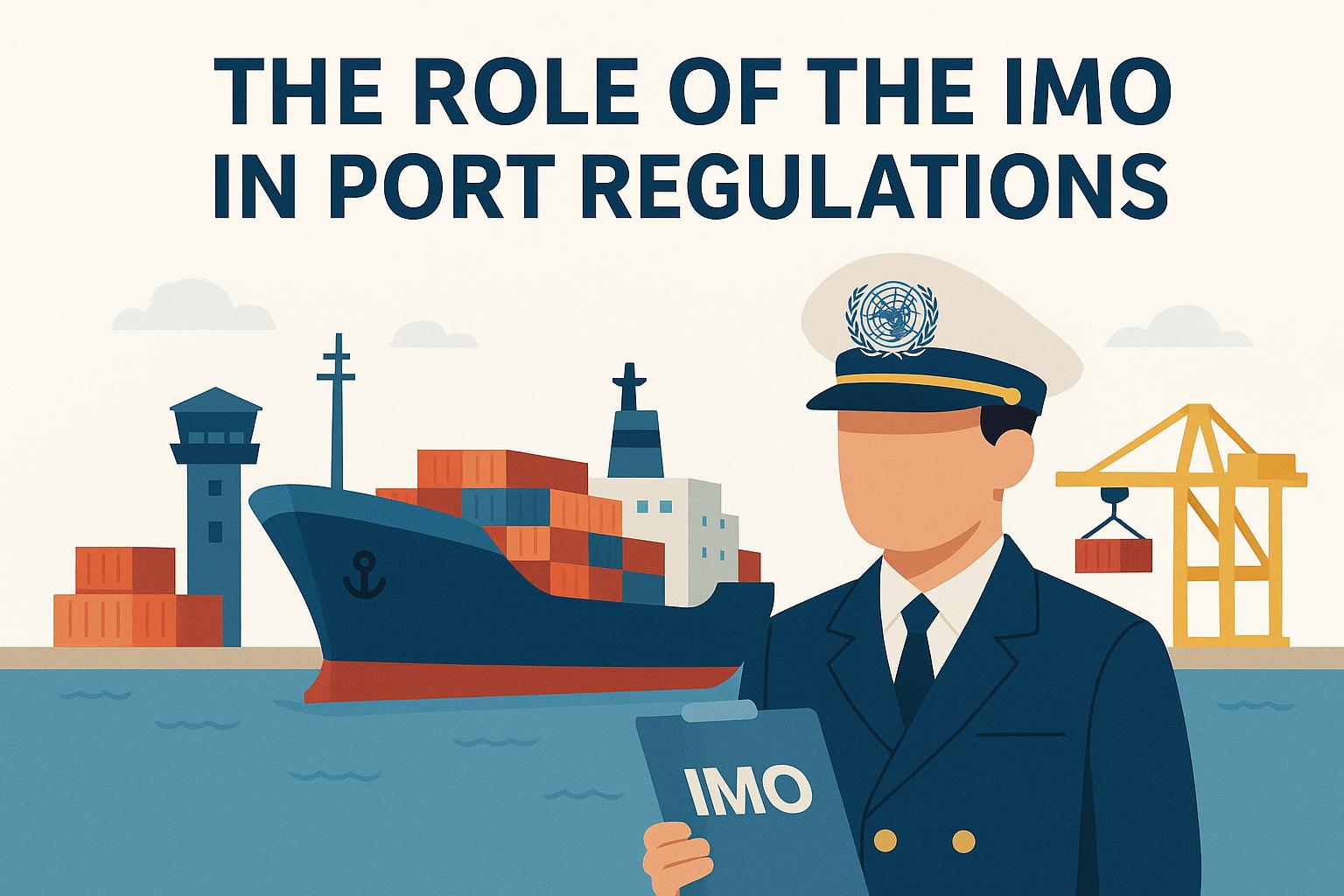
The International Maritime Organization (IMO) serves as a specialized agency under the umbrella of the United Nations, solely dedicated to the regulation and oversight of international shipping activities. Established in 1948, the organization’s primary mission revolves around devising a robust regulatory framework for the global shipping industry that guarantees fairness, effectiveness, and sustainability. By promulgating standardized regulations, the IMO endeavors to enhance maritime safety, foster environmental protection, and facilitate seamless international trade.
IMO’s Influence on Port Regulations
While the IMO’s principal focus remains predominantly on vessel-related matters, its regulatory influence significantly extends to encompass port regulations as well. Recognizing that ports serve as pivotal nodes in the maritime supply chain, it’s crucial for their operations to adhere to international standards to ensure optimum safety and efficiency across global maritime networks.
Safety and Security
The IMO has meticulously developed an array of guidelines aimed at bolstering port safety and security frameworks. A paramount example is the International Ship and Port Facility Security (ISPS) Code, introduced in 2004. This critical standard seeks to address vulnerabilities within ships and port facilities, mandating the implementation of enhanced security measures designed to preclude illicit activities. By offering a uniform regulatory framework, the ISPS Code empowers ports globally to systematically recognize and mitigate potential threats.
Beyond the ISPS Code, the IMO also sets guidelines for the safe handling and transfer of hazardous materials and cargoes at ports, ensuring that procedures adhere to global safety parameters. This extends to regulations regarding the safe embarkation and disembarkation of passengers in cruise terminals, providing confidence to travelers and operators alike about their security while transiting through international ports.
Environmental Considerations
Parallel to safety imperatives, environmental protection stands as another critical sphere where the IMO wields considerable influence over port regulations. Through comprehensive conventions such as the International Convention for the Prevention of Pollution from Ships (MARPOL), the IMO mandates that ports must maintain state-of-the-art facilities and systems to manage and process ship-generated waste responsibly. This encompasses the establishment of adequate reception facilities designated for waste oil, sewage, and garbage, ensuring that these waste materials are managed in an environmentally sound fashion.
Further, ports must adhere to stringent standards regarding emissions and air quality, aligning with global efforts to minimize environmental footprints. Through MARPOL and supporting guidelines, ports manage ballast water discharges and prevent the introduction of invasive species, safeguarding local ecosystems from the impacts of international shipping.
Implementation and Compliance
Compliance with IMO regulations stands as a fundamental responsibility for port authorities worldwide. Although the IMO articulates these international standards, the onus of implementation largely rests with individual member states. National governments integrate IMO regulations into domestic legislation, tailoring them to meet specific local conditions and contexts. Consequently, port authorities hold the responsibility to enforce these regulations diligently at the local level, ensuring compliance with both national and international mandates.
Regular audits and assessments by national agencies, sometimes supported by IMO’s expertise, ensure that ports continuously align and update their practices in accordance with evolving regulations to maintain competitiveness and operational legitimacy in the international arena.
Capacity Building and Training
Beyond regulation, the IMO fulfills a vital role in capacity building and training initiatives to assure the effective implementation of port regulations. The organization frequently orchestrates workshops, training sessions, and technical cooperation programs aimed at assisting member states in both comprehending and applying international standards proficiently. These initiatives fortify local expertise, capacitating ports to meet and exceed global regulatory demands.
Through collaborative partnerships with other UN bodies, academic institutions, and industry stakeholders, the IMO drives the development and dissemination of knowledge, fostering innovation and enabling ports to adopt cutting-edge technologies and methodologies.
Future Challenges and Opportunities
As the maritime industry navigates through continuous evolution, the IMO remains steadfast in adapting its port-related regulations to meet emerging challenges. The dawn of digitization, the imperative for robust cybersecurity frameworks, and the exploration of alternative, sustainable fuel options are all garnering increased attention. The IMO actively engages in exploring these domains, endeavoring to formulate future-ready regulations designed to address escalating issues across the global shipping landscape.
Digital transformation in shipping and port operations promises efficiency but also demands stringent cybersecurity measures to protect data integrity and operational safety. Consequently, the IMO collaborates with ICT experts to craft standards addressing these cyber concerns.
Similarly, the pursuit of decarbonization in the maritime sector has driven the IMO to consider guidelines that support the adoption of alternative fuels and energy sources, ensuring cooler wastage and reduced emissions. These evolving regulations reinforce the industry’s direction towards achieving net-zero carbon emissions in line with international climate accords.
In summary, the International Maritime Organization plays a pivotal role in sculpting port regulations worldwide. Through setting international standards across safety, security, and environmental protection, the IMO assures consistent application of port regulations, thereby contributing to a more secure and sustainable global maritime industry. With its continued focus on adapting to new challenges, the IMO ensures its enduring relevance in shaping the future of international maritime governance.