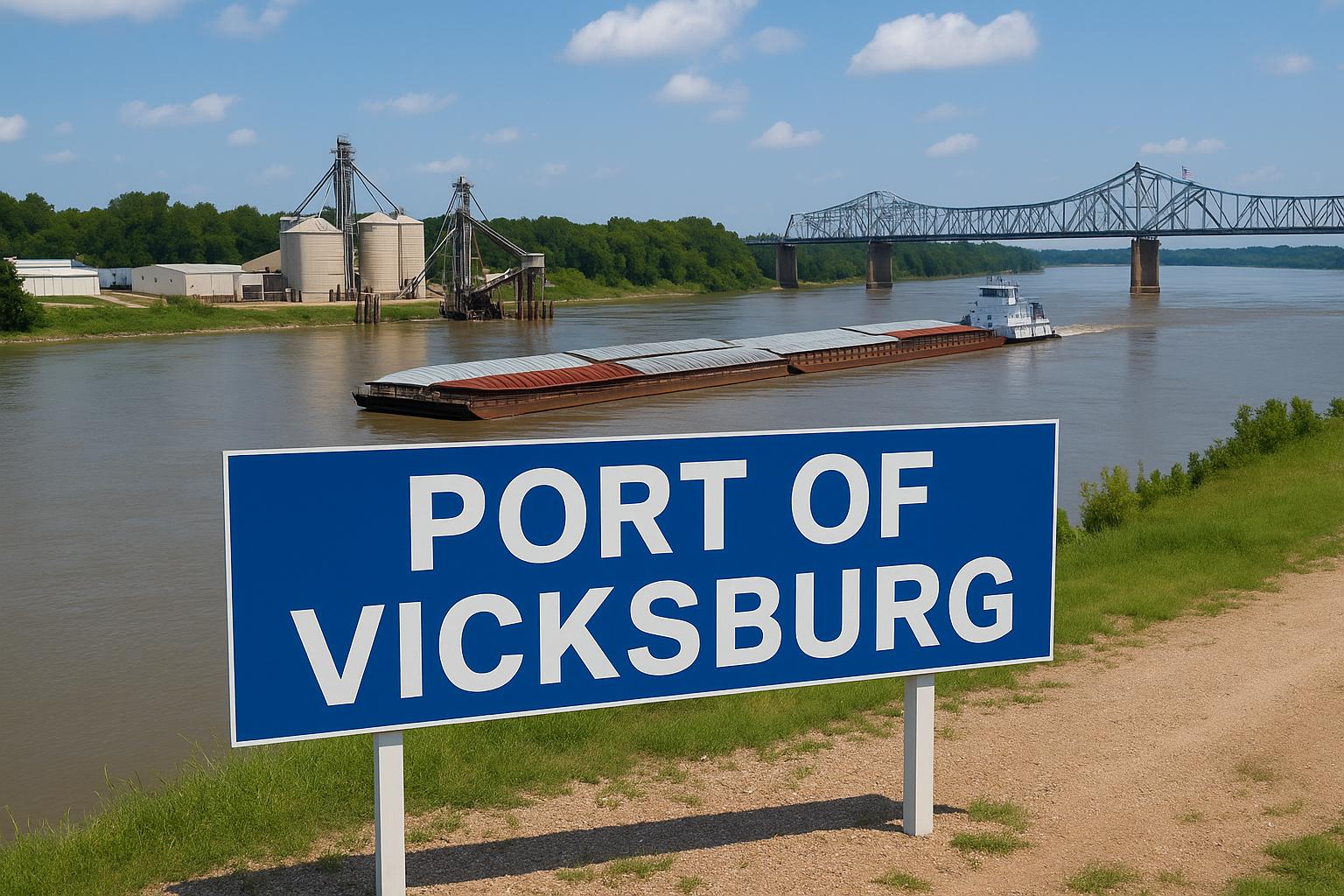
The Strategic Location of the Port of Vicksburg
The Port of Vicksburg, positioned along the mighty Mississippi River, embodies a strategic nexus importantly located within Vicksburg, Mississippi. Its central placement on this crucial waterway magnifies its role as a pivotal gateway for various transportation and logistics operations. This strategic positioning enhances its efficiency in fostering trade and enabling commerce, positioning it as an indispensable asset in the economic landscape of the region and beyond.
Economic Contributions
The economic ramifications of the Port of Vicksburg are substantial, offering significant contributions to both regional and national economic arenas. By managing a considerable volume of goods, including agricultural produce, industrial merchandise, and raw materials, the port serves as a lifeline for the economic dissemination of these commodities. The seamless flow of these goods into and out of the port fortifies local industries, underscoring its critical role in the import and export matrix. This substantial economic throughput not only facilitates economic sustainability but also acts as a catalyst for job creation in surrounding communities, thereby reinforcing its overarching economic influence.
Industrial Significance
The industries situated in and near Vicksburg lean heavily on the port for their import and export requisites. The infrastructure of the port supports a diverse array of industrial sectors, encompassing agriculture, manufacturing, and energy. The port is well-equipped with facilities tailored for bulk cargo handling, thus playing an irreplaceable role in ensuring the uninterrupted movement of essential products. This capability is crucial for maintaining the supply chains of these industries, ultimately bolstering their productivity and operational efficiency.
Transportation and Infrastructure
Transportation proves to be a cornerstone in operations at the Port of Vicksburg. The port, fortified with state-of-the-art infrastructure such as extensive warehouses, advanced loading docks, and expansive storage facilities, stands as a beacon of logistical excellence. The seamless integration of these facilities with both road and rail networks amplifies the port’s adeptness in managing substantial cargo volumes. This connectivity to multimodal transportation culminates in reinforcing the port’s pivotal role as a logistical linchpin, essential to the intricacies of the supply chain.
Environmental Considerations
Operating in a manner that harmonizes with environmental stipulations is an imperative for the Port of Vicksburg. Embracing ecological stewardship, the port strives to minimize its environmental footprint through the adoption of green practices and cutting-edge technologies. Initiatives are centered around promoting sustainable operations and curbing emissions, ensuring that port activities integrate smoothly with the surrounding ecological systems without disrupting the natural balance. These endeavors represent the port’s commitment to an environmentally conscious operational paradigm.
Beyond these substantive roles, the Port of Vicksburg also embodies the integration of dynamic economic factors with environmental mindfulness. By understanding the multifaceted influences it exerts, one gains insight into the complex interplay between geography and economy. As the world pushes progressively towards a globally interdependent economic framework, the importance of strategic transport hubs like the Port of Vicksburg comes to the fore. Its location, logistical competence, and ability to drive industrial growth collectively signal its enduring relevance on both a local and international scale.
Analyzing further, the port’s significance can be gauged by its ability to support a range of activities beyond traditional shipping and logistics. It acts as a focal point for business operations, offering infrastructure that enhances business expansion prospects. The port’s readiness to cater to various industry demands is evident in its approach to infrastructure development; continuous enhancements align with industry trends, thereby future-proofing its operational efficiency.
The importance of the Port of Vicksburg is invariably linked to the broader narrative of trade and transportation along the Mississippi River. A lifeline in American commerce, the Mississippi serves as an artery for trade, with ports like Vicksburg positioned as vital nodes along this expansive network. Their role ensures that the movement of goods adheres to timeliness and efficiency, which are cornerstone tenets in the global supply chain.
Moreover, the persuasive narrative around the port also extends to its partnership networks, engaging actively with stakeholders ranging from governmental bodies to private enterprises. These collaborations foster an ecosystem wherein innovation and traditional practices harmonize, leading to improved operational protocols and service delivery norms.
The pursuit of sustainability alongside economic robustness stands as a testament to the Port of Vicksburg’s foresight. Integrating sustainability into its core operating principles signifies its preparedness to meet future challenges, ensuring long-term viability and continued relevance.
In conclusion, the Port of Vicksburg is an indispensable asset along the Mississippi River, driving economic growth, supporting critical industries, and facilitating efficient transportation networks. Its strategic location, coupled with robust infrastructure, encapsulates its importance within the regional economic framework, positioning it as a key influencer in local and national trade dynamics. However, its broader impact cannot be understated. Through its commitment to environmental sustainability and industrial support, the Port of Vicksburg emerges as a critical fixture within the broader narrative of economic development and environmental stewardship.