Introduction
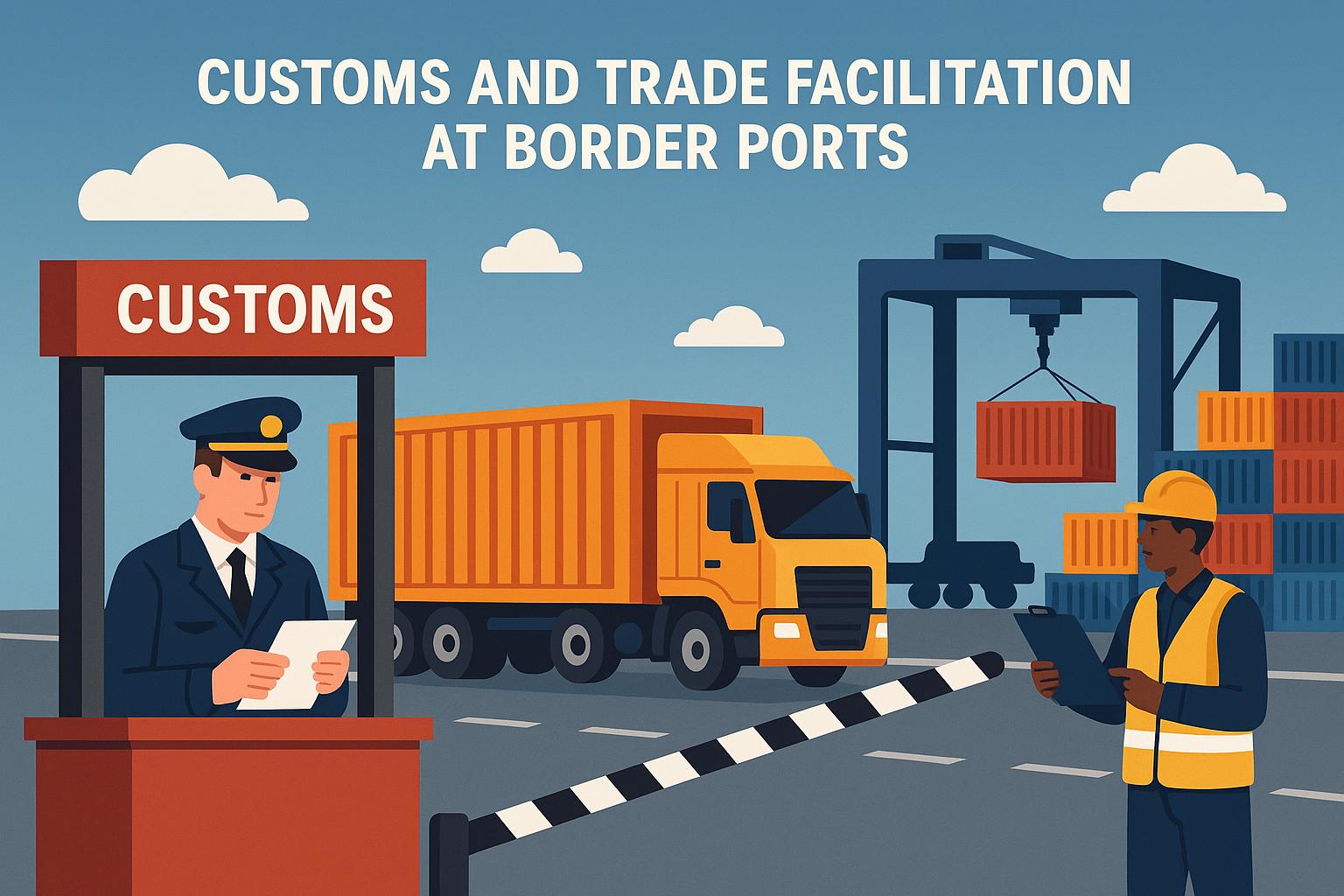
Customs and trade facilitation at border ports are integral components of global trade systems. These processes act as the bridge for goods that are both entering and exiting different nations, ensuring that they do so in compliance with local, national, and international regulations. While their importance is undisputed, managing these intricate procedures requires a deep understanding of both logistical and regulatory frameworks that govern international commerce.
Customs Procedures
Customs procedures serve as key mechanisms for regulating the inflow and outflow of goods through a nation’s frontiers. These processes not only assist in adhering to trade compliance standards but also play a pivotal role in enforcing both national policies and international agreements. At the core of these procedures are several fundamental elements, including the submission of necessary documentation, the payment of tariffs, and the thorough assessment of the goods in transit. Compliance with these established procedures is critical to curtailing illegal practices such as smuggling and trafficking, thereby ensuring that legitimate trade policies are rigorously applied.
Documentation and Tariffs
The aspect of documentation within customs procedures is foundational for the customs clearance process. Typically, required documents include the bill of lading, invoices, and certificates of origin. The purpose of these documents is multifaceted: they are instrumental in verifying the authenticity, nature, and value of the incoming or outgoing goods, as well as identifying their geographical origin. Meanwhile, tariffs represent the financial charges levied on imported goods and are pivotal for dual reasons. First, they serve as a significant source of government revenue. Second, they protect domestic industries by adding a fiscal buffer against foreign competitors, thus regulating the equilibrium between imports and local markets.
Assessment and Inspection
Once entry is attempted, goods are subject to rigorous assessment and inspection by customs officials. This multifaceted process involves validating the submitted documentation, conducting thorough physical inspections, and appraising the goods to determine accurate tariff calculations. The evolution of modern technologies, including advanced scanning techniques and sophisticated analytical tools, has substantially improved the efficiency and precision of these assessments. These technological interventions not only expedite the inspection processes but also enhance the accuracy of detecting discrepancies or irregularities in the transit of goods.
Trade Facilitation Initiatives
The concept of trade facilitation encompasses efforts to simplify, harmonize, and modernize international trade procedures. Initiatives in this arena strive to overhaul and streamline customs processes, aiming to diminish costs and heighten the efficiency of cross-border trade transactions. This encapsulates improving transparency within the system and fostering robust cooperation between customs agencies and other relevant stakeholders in the trade ecosystem.
Single Window Systems
In contemporary trade facilitation efforts, the advent of single window systems represents a substantial shift toward more efficient operations. These systems facilitate the submission of all requisite documentation through a unified digital platform, reducing procedural redundancies and significantly accelerating the customs clearance process. This integrated approach fosters seamless communication and interaction among various government agencies, leading to expedited operations that are both more transparent and efficient.
Risk Management
In the context of trade facilitation, risk management strategies are integral for enhancing efficiency while still maintaining robust safety protocols and compliance standards. By leveraging risk-based frameworks, customs authorities can direct their focus toward analyzing high-risk cargo shipments, enabling goods deemed low-risk to traverse border controls with minimal intervention. This is greatly supported by the implementation of advanced data analytics and intelligent information-sharing systems, which collectively enhance the identification and prioritization of potential threats with greater precision and insight.
Challenges and Future Outlook
Despite advancements in technology and the optimization of processes, customs and trade facilitation at border ports continue to face significant challenges. The global landscape of international trade regulations remains notably complex, with disparities often arising due to varying national policies and compliance requirements. There are also ongoing concerns regarding infrastructural limitations, which can hinder the effective implementation of these processes. Additionally, the need for enhanced synergy and collaboration among border agencies across different jurisdictions remains a key issue.
Looking ahead, the future of customs and trade facilitation appears increasingly reliant on technological innovation and international cooperation. Emerging technologies such as blockchain and artificial intelligence present promising potential to further enhance the efficiency and transparency of customs operations. These technologies can offer unprecedented capabilities in secure data management and predictive analytics, streamlining various aspects of customs procedures. Furthermore, regional and global trade agreements, exemplified by the World Trade Organization’s Trade Facilitation Agreement, are pivotal in driving more integrated and consistent trade facilitation practices on a global scale.
In conclusion, efficient customs and trade facilitation procedures are imperative to ensuring that goods are transported swiftly and securely across international borders. This efficiency not only bolsters economic growth but also benefits consumers worldwide, facilitating the seamless flow of products in a globalized market. As nations continue to leverage technology and engage in cooperative efforts, it is anticipated that these processes will undergo further transformation, become more streamlined, and provide even greater economic benefits in the years to come.