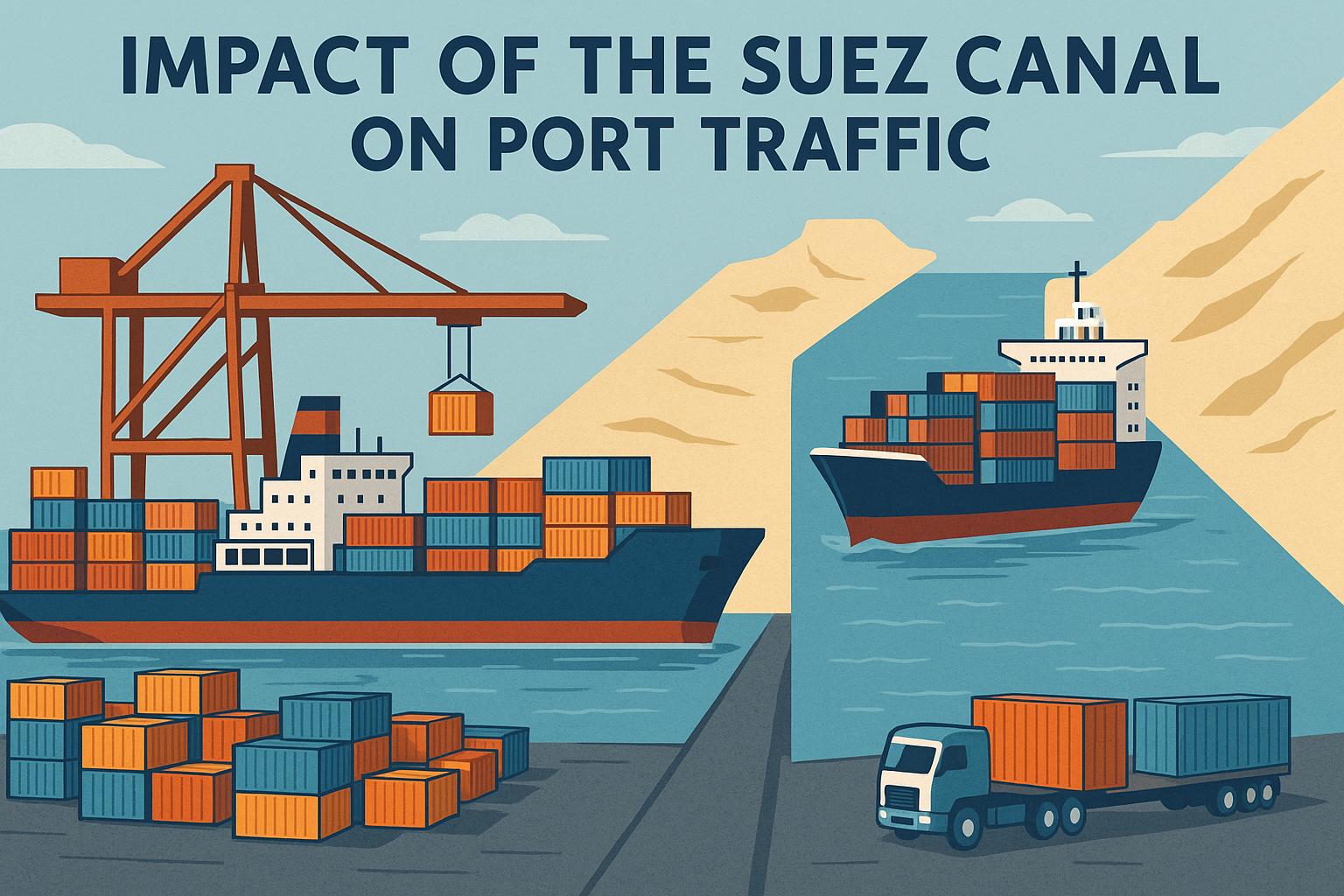
The Role of the Suez Canal in Global Maritime Trade
The Suez Canal, a crucial waterway located in Egypt, serves as a pivotal connector between the Mediterranean Sea and the Red Sea. This connection establishes the shortest maritime route between Europe and Asia, drastically altering the dynamics of global trade. Its strategic location and historical relevance have left an indelible mark on international shipping and port activity around the globe.
Facilitating Efficient International Trade
The primary contribution of the Suez Canal to international trade lies in its ability to significantly shorten shipping routes. By allowing vessels to bypass the lengthy and treacherous trip around Africa’s southern tip, the canal reduces not only travel distance but also time. This ability to cut down transit times results in considerable cost savings for shipping companies. Such reductions in both time and expenses enhance the overall fluidity of global trade.
The presence of the Suez Canal impacts not only the port activity within Egypt but also in the surrounding regions. European ports, particularly those positioned along the Mediterranean, experience significant growth in activity. Similarly, ports located in Asia benefit from expedited routes, which promote brisker trade exchanges. Moreover, ports situated in the Middle East, such as Jeddah, capitalize on geographical proximity, enhancing their economic prospects through increased port traffic.
Influence on Port Traffic
The effects of the Suez Canal on port traffic are extensive and far-reaching. Ports in the Mediterranean region find themselves witnessing a surge in activity as vessels navigate through the canal en route to various global destinations. This increase in port traffic is particularly evident in major European ports like Rotterdam and Antwerp. These ports find themselves benefitting from decreased shipping times, often leading to a substantial rise in cargo throughput.
In Asia, ports in countries such as Singapore and China similarly gain from the faster shipping routes offered by the canal. This advantage allows for swifter trade exchanges, which, in turn, boosts the economic interactions between Asian and European markets. Concurrently, the canal’s influence on Middle Eastern ports, such as the Port of Jeddah, cannot be understated, as they receive heightened operational demand due to their strategic location near this vital maritime artery.
Economic Implications for Global Ports
Beyond the immediate changes in traffic patterns, the economic ramifications for ports on a global scale are indeed significant. By fostering quicker and more streamlined trade routes, the Suez Canal assists in the reduction of transportation overheads. This boon enables ports along the canal’s route to attract a broader range of shipping lines and related services, thereby enhancing their economic viability.
The significance of the Suez Canal is also underscored by the challenges that arise during times of disruption or blockage. When the canal is impeded for any reason, ports worldwide can experience profound ripple effects. These disturbances often result in delays and congestion along alternate routes, which can severely impact the operational efficiency of global ports.
Strategic Considerations and Future Developments
In today’s ever-evolving global trade landscape, the Suez Canal continues to be a focal point when it comes to maritime logistics and strategic planning. As international trade patterns shift and develop, the canal’s role in facilitating these changes remains paramount. Potential future developments, including canal expansions and technological innovations, hold the promise of further augmenting its impact on global port traffic.
Shipping companies and port authorities are continuously observing changes related to the canal’s operations, ensuring that they retain their competitive edge in this dynamic trading climate. By adapting their strategies to account for alterations in canal usage, these entities can maintain their adaptability and resilience in the face of evolving logistical challenges.
In conclusion, the Suez Canal’s influence on port traffic extends far beyond simple geographical connections. By providing a crucial link between continents, it has reshaped the framework of global maritime trade, leaving an enduring legacy on ports worldwide. Its role in boosting efficiency and shortening trade routes underscores its ongoing significance within the global supply chain.